Materials
Class 4 Impact Shingles in Colorado: A Deep Dive
Class 4 impact-rated shingles are now installed on the majority of new Front Range roofs. The category is well marketed but poorly explained. UL 2218 and the newer IBHS test measure different things. SBS-modified asphalt and scrim-reinforced asphalt produce different real-world performance. Insurance discount eligibility varies meaningfully by carrier. This guide reads the test standards, compares the major products, and quantifies the discount picture as carriers actually apply it on the Front Range.
What UL 2218 actually measures
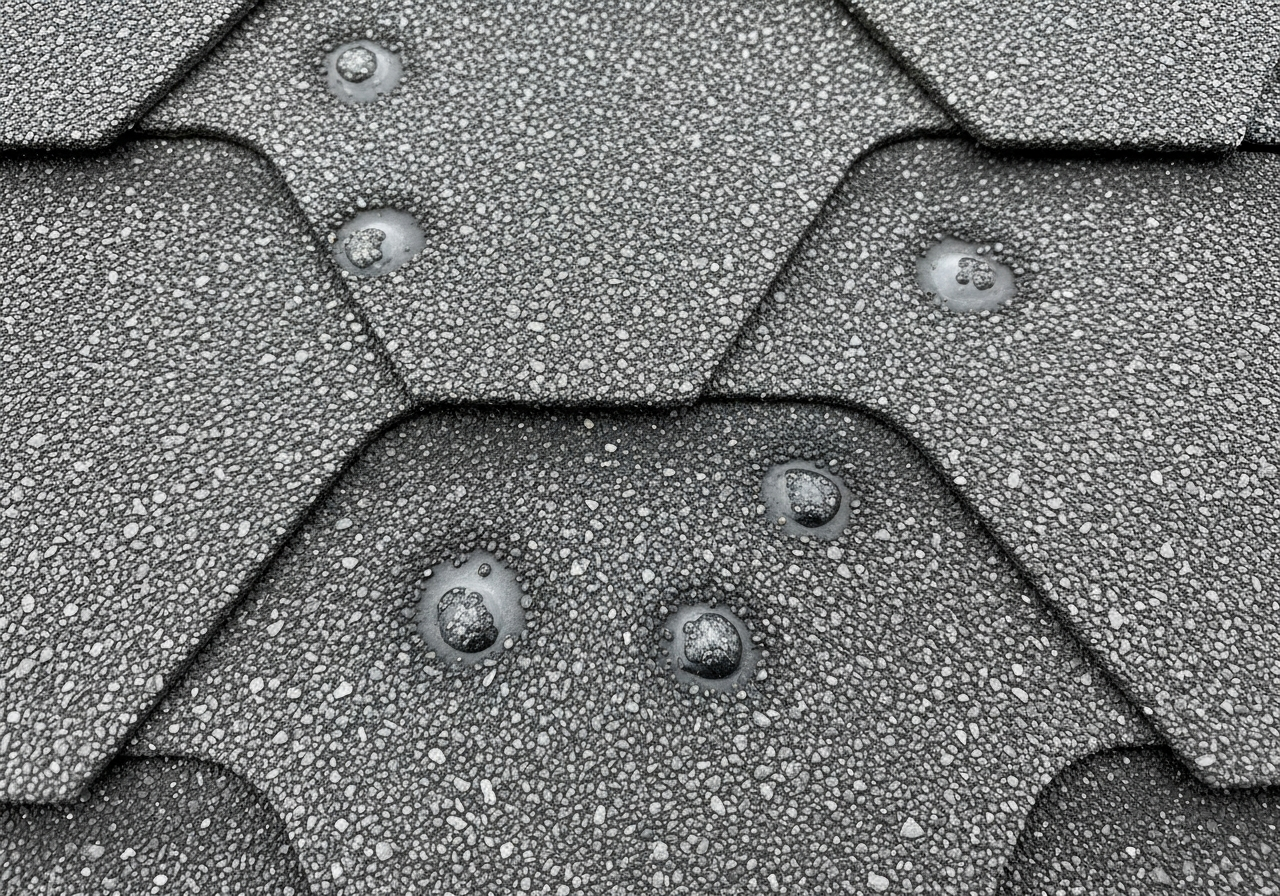
UL 2218 is a steel ball drop test. A 2-inch steel ball is dropped from a fixed height onto the shingle in a controlled lab setting. The shingle must show no rupture, fracture, or crack on the back surface for the rated class. UL 2218 has four classes, with Class 4 the highest. Class 4 corresponds to the 2-inch steel ball dropped from 20 feet.
The test measures impact resistance to a single sharp impact at one point on a new shingle. It does not measure repeated impact, aged shingle performance, hail of irregular shape, or the cosmetic granule displacement that drives most insurance claims. Granule loss is excluded from impact failure under the test.
Class 3 vs Class 4 shingles: what to compare in a written bid
When comparing Class 3 and Class 4 shingles for a Colorado home, start with the exact products in the bids. The class describes impact-test performance, not the entire roof system or everything a warranty covers. Ask for the supporting documents before choosing an upgrade.
Class 3 and Class 4 are different impact-resistance classifications under UL 2218. Wind resistance is evaluated separately. An impact-class label should not stand in for the quoted product's wind-test documentation or warranty terms. IBHS explains the separate impact and wind test standards.
Laboratory results also have limits. IBHS notes that standardized tests of new products do not account for factors such as weathering, temperature and aging. A Class 4 designation is not a promise that a roof will be hail-proof. Read the testing context in IBHS Roof 101.
Put both bids on the same checklist
| Compare | Ask for this in each written bid |
|---|---|
| Exact product | Manufacturer, model name and documentation confirming the quoted UL 2218 class. |
| Wind and warranty | The applicable wind-test information and warranty documents, including installation requirements, coverage limits and exclusions. |
| Roof-system scope | The included components and installation work. Ask the contractor to identify differences between the bids beyond the shingle itself. |
| Upgrade price | A separate written amount for the proposed upgrade, with any other scope changes identified. |
| Insurance | Written confirmation from your insurer of whether the exact product and installation qualify for any credit under your property's policy. |
Use the manufacturer's current documents for the model being quoted. A product data guide can help locate the relevant fields, but it is not a substitute for the applicable warranty and installation instructions. Malarkey's product data guide is one example; its terms should not be applied to another manufacturer's shingles.
Decide from the documented differences
Compare the upgrade amount separately from any insurer-confirmed credit. Do not count an unconfirmed credit as savings or assume the upgrade will pay for itself. Ask the contractor which code requirements apply to your project rather than treating either class as a universal requirement.
Bring both bids and their product documents to the estimate discussion. Review the proposed scope alongside Pro Shield's asphalt-shingle roofing service, and resolve missing details before selecting a product.
What the IBHS rating adds
IBHS uses a separate Performance Evaluation Rating for impact-resistant shingles. Its rating categories are Excellent, Good, Marginal, and Poor; beginning with the 2025 update, IBHS also displays a numerical score alongside the category for each product. A UL 2218 Class 4 label is not an IBHS numerical rating category.
UL 2218 Class 4 is the highest of UL’s four impact classifications. Under the standard summarized by IBHS, a Class 4 product passes after two impacts in the same location with a 2.00-inch steel ball when no crack is visible on the back of the shingle. This standardized classification evaluates new products; it does not by itself account for weathering, temperature, aging, or the full range of damage modes assessed in the IBHS evaluation. Compare the exact product’s current manufacturer documentation and IBHS result where available, and confirm any insurance treatment with the carrier for the specific policy.
SBS-modified versus scrim-reinforced construction
Class 4 status can be achieved through two different construction approaches, and they perform differently in the field.
- SBS-modified bitumen shingles use styrene-butadiene-styrene polymer in the asphalt to produce a flexible, rubber-like material that absorbs impact energy by deforming. Malarkey Vista AR, Highlander NEX AR, and Legacy AR are the most commonly installed SBS-modified products on the Front Range.
- Scrim-reinforced shingles use a polymer mesh or fiberglass scrim laminated to the back of a standard asphalt shingle. The scrim resists the steel ball penetration required by UL 2218 but does not change the asphalt's behavior under impact. GAF Armor Shield and Owens Corning Duration Storm use this approach.
- Field experience and the IBHS aged-shingle test data both indicate that SBS-modified shingles maintain impact performance better as they age. Scrim-reinforced shingles can pass UL 2218 when new but show more granule loss and surface damage from aged-product hail strikes.
Brand and product comparison
The Class 4 market on the Front Range is dominated by four manufacturers. Each has multiple product lines at different price points.
- Malarkey: Vista AR and Highlander NEX AR are SBS-modified, IBHS rated, and carry algae resistance. Malarkey is widely regarded by Front Range roofing crews as the strongest aged-shingle hail performer.
- Owens Corning: Duration Storm uses a polymer scrim on the back of the standard Duration shingle. The TruDefinition Duration FLEX is the SBS-modified upgrade. The Storm product is more common, the FLEX product is less common but performs better in IBHS testing.
- GAF: Timberline Armor Shield II is the scrim-reinforced Class 4 product. The newer Timberline UHDZ uses an enhanced shingle with improved performance, though the impact-rated configuration is specific.
- CertainTeed: NorthGate ClimateFlex uses an SBS-modified construction and is the Class 4 product in the Landmark family. ClimateFlex carries IBHS ratings comparable to Malarkey.
Insurance discount eligibility and amounts
Carriers apply the Class 4 discount differently. The 2018 Mile High Roofing Cooperative survey and subsequent annual updates show a wide range across carriers.
- Typical Class 4 discount range across major carriers: 10 to 35 percent on the wind and hail portion of the homeowner premium.
- Typical Front Range outcome: 25 to 28 percent reduction on the wind and hail premium, which translates to roughly 8 to 12 percent of the total homeowner premium.
- USAA and Allstate apply discounts on the higher end of that range. State Farm and Farmers commonly apply discounts in the middle of the range. American Family discounts vary by underwriting unit.
- Most carriers require a Class 4 certificate from the contractor, the manufacturer product brochure, and either an installation invoice or a roof inspection report to apply the discount. Some carriers also require IBHS rating documentation.
- The discount typically applies for the life of the roof or for a defined period such as ten years, after which the carrier may require recertification.
Cost premium and breakeven analysis
The Class 4 upgrade premium varies by brand and tier. The breakeven calculation depends on the discount applied and the homeowner's premium.
- Typical Class 4 upgrade premium over equivalent standard architectural shingle on a 30-square Front Range job: 800 to 2,200 dollars.
- Typical annual premium savings from the Class 4 discount on a Front Range homeowner policy: 200 to 700 dollars depending on policy size and carrier.
- Typical breakeven period for the upgrade premium based on insurance savings alone: 2 to 8 years.
- Additional value from reduced claim frequency, reduced deductible exposure, and improved aged shingle performance is real but harder to quantify. Front Range insurance carriers track Class 4 roofs as a separate cohort and report meaningfully lower claim frequency on equivalent storms.
What Class 4 does not do
Class 4 is not hail proof. It is hail resistant. The marketing in this category sometimes overstates the protection and creates false expectations.
- Class 4 shingles can still suffer cosmetic granule displacement from hail, and most carriers exclude cosmetic damage from coverage on Class 4 product.
- Class 4 shingles can still be damaged by hail above 2.5 inches in diameter. Hail of that size is documented several times per year on the Front Range.
- Class 4 status does not change the manufacturer's wind rating, ventilation requirements, or installation specifications. The same accessory components and ventilation are required.
- Class 4 status does not extend the manufacturer warranty in most cases. The base warranty applies. Some manufacturers offer enhanced wind coverage when accessory components are installed.
Recommendation framework for Front Range homeowners
The decision framework for Class 4 in 2026 is relatively settled.
- On any Front Range home, the breakeven on Class 4 typically arrives within two to eight years of installation. The upgrade is economically rational on most jobs.
- Among Class 4 options, SBS-modified products from Malarkey and CertainTeed ClimateFlex carry better aged-shingle performance based on IBHS testing.
- Scrim-reinforced products from GAF and Owens Corning meet the discount requirement and cost less, with somewhat lower aged-shingle performance.
- Confirm with the homeowner's specific carrier that the chosen product qualifies for the discount before signing. A small number of underwriting units restrict the discount to specific brand-and-product combinations.
$1,800 upgrade vs. $720 annual premium discount
Front Range carriers commonly offer 25 to 28 percent off the wind/hail portion of premium for a verified Class 4 (UL 2218) installation. Assumes mid-range discount on a typical Lakewood policy.
| Year | Cumulative discount | Net of $1,800 upgrade | Status |
|---|---|---|---|
| 1 | $720 | $-1,080 | Recovering |
| 2 | $1,440 | $-360 | Recovering |
| 3 | $2,160 | +$360 | Paid back |
| 4 | $2,880 | +$1,080 | Paid back |
| 5 | $3,600 | +$1,800 | Paid back |
| 6 | $4,320 | +$2,520 | Paid back |
| 7 | $5,040 | +$3,240 | Paid back |
| 8 | $5,760 | +$3,960 | Paid back |
| 9 | $6,480 | +$4,680 | Paid back |
| 10 | $7,200 | +$5,400 | Paid back |
| 11 | $7,920 | +$6,120 | Paid back |
| 12 | $8,640 | +$6,840 | Paid back |
Payback year: Year 3. Every year after that is straight savings, plus the impact resistance benefit at the next hailstorm.
From cosmetic to total loss
NOAA classifies any hail one inch or greater (quarter-size) as severe. The threshold for a successful asphalt shingle insurance claim varies by carrier and roof age, but most claims are filed in the 1.0 to 1.75 inch range.
- Cosmetic
- Borderline
- Functional
- Total loss
Damage thresholds vary with shingle age, slope, exposure, and impact angle. Pro Shield walks the roof to confirm functional damage before recommending a claim.