
Pricing and bids
What Should a New Roof Cost in Colorado
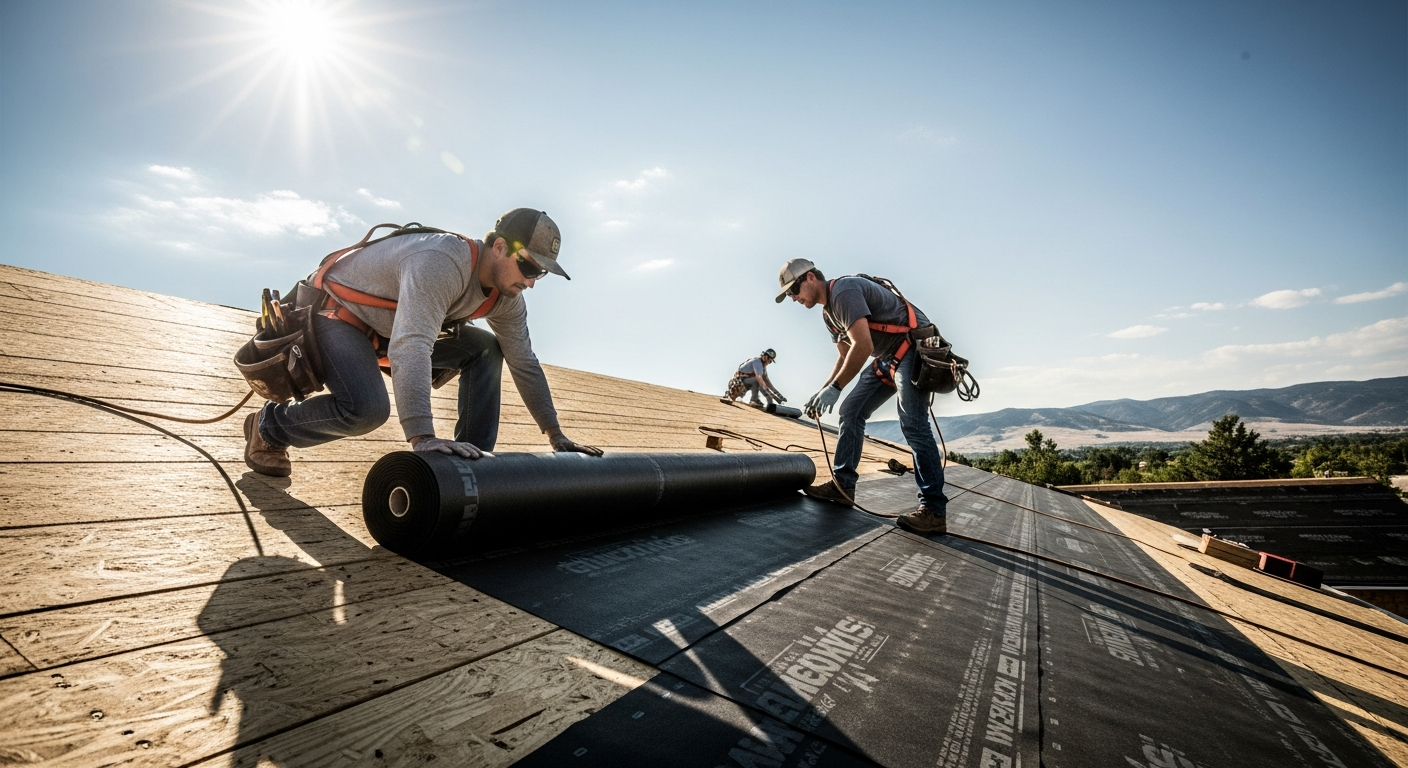
A typical Colorado asphalt-shingle roof replacement runs $12,000 to $22,000 in 2025 to 2026, or roughly $650 to $900 per 100 square foot square installed for a Class 4 impact-resistant system. Premium systems (metal, tile, synthetic shake) typically run $1,200 to $2,300 or more per square, putting full mountain or large two-story projects in the $30,000 to $80,000 range. The single biggest reason quotes vary by 50 to 100 percent on the same roof is scope, not labor markup.
Average Colorado replacement cost in 2025 to 2026
National aggregators (This Old House, Forbes Home, Angi) report Colorado averages of $9,500 to $24,000. Local Colorado contractor pricing in 2025 to 2026 runs somewhat higher because aggregator data lags the post-storm market.
The average Colorado roof is roughly 26 squares with pitch (Instant Roofer data), so most asphalt jobs land in the $15,000 to $22,000 range across the Denver and Front Range market. Permit fees in Denver run $112 to $560; Aurora, Lakewood, and most Jefferson County jurisdictions run $150 to $400; Fort Collins and Boulder run $200 to $500.
- Architectural Class 3 asphalt: $550 to $700 per square installed
- Class 4 impact-resistant asphalt: $650 to $900 per square installed
- Premium designer asphalt (Presidential, Camelot): $900 to $1,200 per square
- Stone-coated steel and standing seam metal: $1,275 to $1,800 per square
- Concrete tile: roughly $1,275 per square; clay tile higher
- Synthetic shake or slate (DaVinci, Brava, F-Wave): $1,500 to $2,000 per square
- TPO and EPDM low-slope sections: $700 to $1,400 per square installed
Cost by home size
These are 2025 to 2026 Colorado ranges for Class 4 architectural shingles, one-layer tear-off, synthetic underlayment, code-compliant ice and water shield, drip edge, ridge vent, standard step flashing, and a permit. Premium materials, multi-story access, or significant decking replacement push toward or above the high column.
- Small home around 1,500 square feet (18 to 22 squares): $10,500 to $24,000 depending on complexity
- Medium home around 2,200 square feet (25 to 30 squares): $14,000 to $32,000
- Large home around 3,000 square feet (35 to 45 squares): $19,000 to $48,000
- Very large home 4,000 plus square feet (50 plus squares): $28,000 to $80,000 plus
Regional differences within Colorado
Denver metro is the benchmark market. Architectural-shingle replacement on a 2,000 square foot home runs $13,000 to $20,000 typically, with the median Denver number around $17,000 across multiple local contractor data sets.
Colorado Springs and El Paso County have slightly lower labor than Denver but stricter inspection through the Pikes Peak Regional Building Department. Class 4 is heavily used. Reroof permits are required for any work over 100 square feet, and ice and water shield is required above 7,000 feet of elevation.
Northern Colorado (Fort Collins, Loveland, Greeley, Boulder, Longmont) runs labor about 5 to 15 percent above Greeley and Loveland and 10 to 20 percent below Denver and Boulder peak rates. Fort Collins requires Class 4 impact-resistant shingles when 50 percent or more of a roof is being replaced.
Foothill and mountain communities (Evergreen, Conifer, Genesee, Indian Hills, Morrison, Estes Park, Bailey) commonly run 15 to 40 percent above Denver. Drivers include Class A roof assembly requirements under the 2025 Colorado Wildfire Resiliency Code in mapped Wildland-Urban Interface zones, steeper pitches, freight and fuel surcharges up I-70 and US-285, short installation seasons (May through early October), ground snow loads of 50 to 100 plus pounds per square foot that may trigger structural review, and HOA design-review requirements.
What drives the $14,000 versus $32,000 spread on the same house
Pitch is one of the larger labor multipliers. A 4 in 12 pitch is walkable. An 8 in 12 adds about 10 to 15 percent. A 10 in 12 to 12 in 12 adds 25 to 40 percent. Anything over 12 in 12 typically requires roof jacks, harnesses, and a much slower pace.
Stories add 10 to 20 percent for two-story over single-story; deck-and-ledge complexity adds another 10 to 20 percent. Each valley, hip, dormer, skylight, chimney, and penetration adds labor and flashing scope. A cut-up roof with eight valleys and three dormers can cost 30 to 50 percent more per square than a simple gable.
Tear-off and disposal runs $100 to $150 per square per layer. Colorado code caps shingles at two layers, so a third layer always requires a full tear-off. Decking replacement at $70 to $100 per sheet is common; older or storm-damaged roofs can need 20 to 40 percent of decking replaced, easily $1,500 to $5,000 of additional cost.
Line items a complete Colorado proposal should include
A realistic, code-compliant Colorado proposal lines out each of the items below. Knowing the going rate helps you read a bid and spot what is missing.
- Tear-off and disposal: $100 to $150 per square per layer
- Permit pulled by contractor in their name (not yours)
- Decking allowance: 5 to 10 sheets included with photo documentation
- Ice and water shield: 24 inches past the warm wall at eaves, full valleys, around penetrations, and 36 inches up on roofs at 8 in 12 or steeper
- Synthetic underlayment (15 pound felt is a red flag on a modern Colorado proposal)
- Drip edge and rake edge metal: $2.50 to $4.00 per linear foot installed (required by IRC)
- Step, counter, and kick-out flashing: $8 to $15 per linear foot at walls and chimneys
- Pipe boots and vent flashings: $25 to $75 each (specify product line, not just rubber)
- Continuous ridge vent with intake balance per IRC R806
- Chimney cricket on chimneys wider than 30 inches (code-required)
- Manufacturer system warranty (GAF Golden Pledge, Owens Corning Platinum, Malarkey Emerald or Diamond, CertainTeed SureStart Plus)
- Written workmanship warranty in years (5 to 10 minimum)
- Magnetic-sweep cleanup
- Certificates of insurance (general liability and workers compensation) sent directly from the carrier
Common add-on costs that surprise homeowners
These are real Colorado 2025 to 2026 ranges. Most are not optional on a code-compliant project.
- OSB or plywood decking (4 by 8 sheet installed): $70 to $100
- Full deck replacement on 2,000 square feet: $4,000 to $7,000
- Code upgrade allowance where ordinance and law coverage is absent: $500 to $2,500 plus
- Skylight resealing or flashing kit: $300 to $800 each
- Skylight replacement (curb-mount, like for like): $1,500 to $3,500 plus each
- Chimney flashing (full step plus counter): $400 to $1,800
- Ridge vent in a re-roof: $900 to $1,200
- Adding intake or soffit ventilation: $300 to $650
- Seamless aluminum gutters and downspouts (about 150 feet): $1,200 to $2,500
- Heat cable system: $11 per foot installed; full system $3,500 to $6,000
- Solar panel detach and reset: $1,500 to $4,000 plus
- Snow guards on mountain metal or tile roofs: $1,500 to $3,000
- Class 4 upgrade over Class 3: $50 to $150 per square ($1,000 to $3,000 typical)
- Mountain access or steep-pitch surcharge: 15 to 40 percent on labor
The Class 4 economics that almost always pencil out
Class 4 (UL 2218) impact-resistant shingles are the smartest dollar in Colorado roofing for most homes. The upcharge is typically $50 to $150 per square, or $1,000 to $3,000 on a 2,200 square foot home. Most Colorado carriers (State Farm, USAA, Farmers, Allstate, American Family) offer 10 to 35 percent wind and hail premium discounts on the dwelling portion of the policy, with a typical Front Range outcome around 25 to 28 percent.
On a $4,000 annual policy, a 28 percent discount runs about $1,120 per year. The upgrade typically pays back in 2 to 4 years. On insurance restoration claims with ordinance and law coverage, the upgrade is often paid by the carrier when the local jurisdiction (such as Fort Collins or parts of Larimer County) requires Class 4.
Verify the specific shingle model on the manufacturer Class 4 certification document and on the carrier discount list. Send the certificate to your agent and confirm the discount in writing.
Why a low bid is often the most expensive choice
A low bid can be legitimate from an established Colorado contractor working an off-season simple ranch home or a manufacturer-rebate program. A low bid is a red flag when any of the following are true.
- Door-knocker after a storm with no local office and a toll-free 800 number
- Promises to cover or absorb your insurance deductible (illegal under CRS 6-22-105)
- Demands a large deposit upfront with no materials delivered
- No written contract with the SB 38 required terms
- Will not pull a permit or claims one is not needed
- No certificates of insurance directly from the carrier
- Vague material specs (architectural shingles with no brand and no impact rating)
- No ice and water, drip edge, or ventilation line items
- Decking listed as an extra rather than a per-sheet allowance
- Out-of-state license plates
How to compare bids fairly
Put bids on the same scope before comparing dollars. If one bid lists Class 4 shingles, full ice and water shield at all eaves and valleys, a 10-sheet decking allowance, ridge vent, and a manufacturer system warranty, and another bid is ambiguous on any of those items, the cheaper bid is almost always cheaper because it has dropped scope, not because it has found efficiency. Most reputable Colorado bids on a 2,200 square foot Front Range home with Class 4 cluster between $20,000 and $24,000.