
Insurance
How a Colorado Hail Claim Actually Works
If your home took a real hail event, your insurance policy probably owes a roof replacement. The process has steps, and the order matters. Here is how it works in Colorado in 2025 to 2026, including the percentage deductibles, ACV-versus-RCV math, code-upgrade coverage, and the Bertisen and Gregory case law that have reshaped the homeowner's leverage.
Step 1: Get an honest inspection first
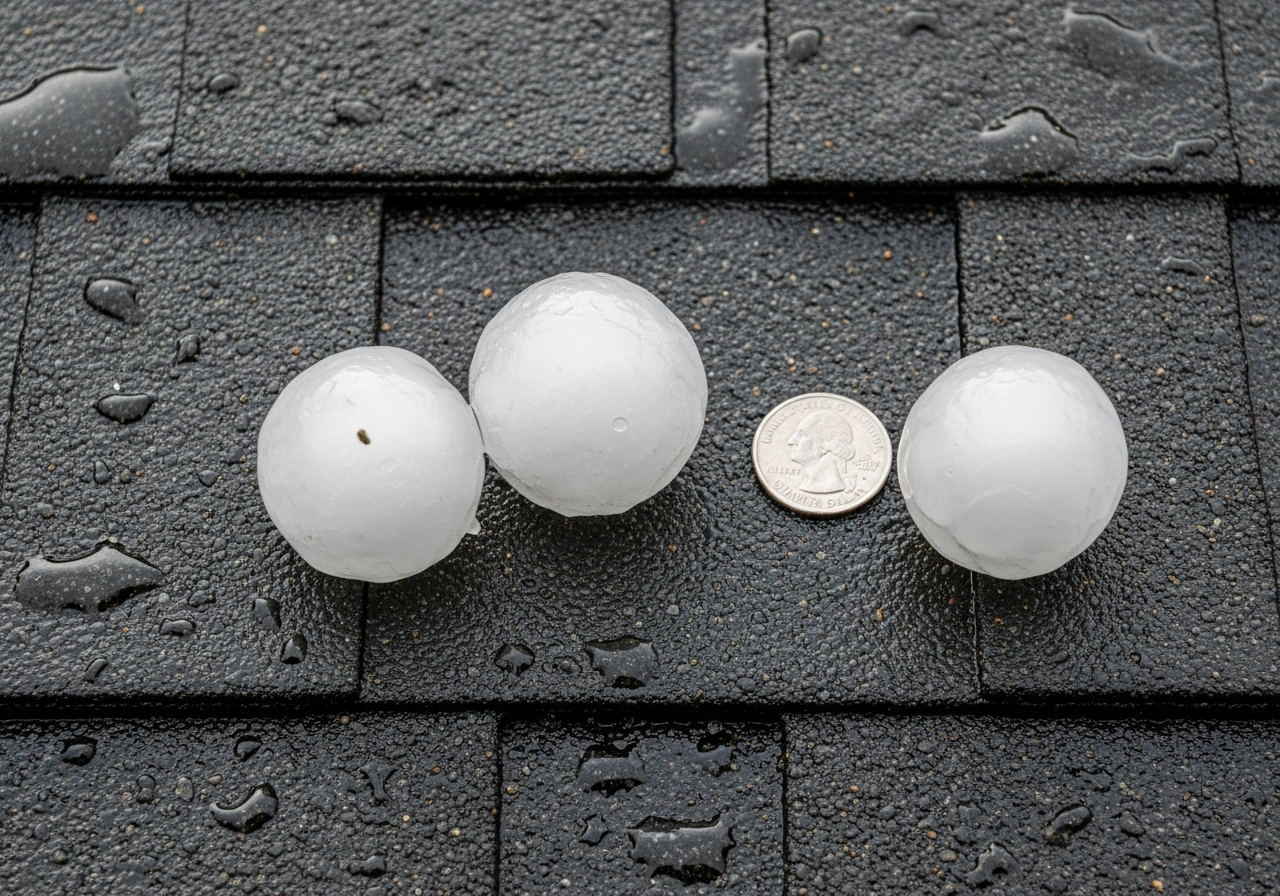
Before filing, have a local Colorado-licensed contractor walk the roof. A reputable inspection includes a 10 by 10 foot test square on each slope with hail hits chalk-marked in a contrasting color (typically circling 8 to 12 hits per damaged slope) and a written report with photos.
If there is no functional damage, do not file. A denied claim still appears on your CLUE report (Comprehensive Loss Underwriting Exchange) for 5 to 7 years, can lead to premium increases of 7 to 10 percent, and contributes to non-renewal risk in today's tight Colorado market.
Step 2: File the claim with your carrier
Note the date and location of the storm. NOAA's Storm Events Database (ncei.noaa.gov/stormevents) and the National Weather Service publish event records that confirm hail size and timing. Most Colorado adjusters use the same data; matching the official record strengthens your claim.
Get a claim number in writing. Ask in writing for the prompt-notice deadline, the claim filing deadline, the supplement deadline, and whether you have a separate wind and hail deductible. After Gregory v. Safeco (Colorado Supreme Court, 2024), insurers cannot deny late filings on missed notice deadlines unless they can show actual prejudice. Even so, the cleanest path is to report within 12 months of the date of loss.
Step 3: Read your declarations page
Four items determine 90 percent of what you actually receive.
- Wind and hail deductible: now usually 1 to 5 percent of dwelling Coverage A. On a $500,000 home a 2 percent deductible is $10,000 out of pocket before the insurer pays anything
- ACV versus RCV: RCV pays full replacement (with recoverable depreciation released after work is documented). ACV pays only depreciated value (often 30 to 60 percent on a 10 to 20-year-old roof)
- Roof Payment Schedule (RPS): a depreciation table built into the policy that prorates payouts by age (often 100 percent at year 0, 85 percent at 5, 70 percent at 10, 25 to 40 percent at 16 to 20)
- Cosmetic damage and matching exclusions: read the endorsements; they can leave you with mismatched siding or roof and no recourse
Step 4: Meet the adjuster on the roof
Be present for the adjuster's inspection. Have your independent roofer there too if possible. Walk the adjuster through every chalk-circled hit, gutter dent, AC condenser fin dent, and interior stain. Provide your photo file and the NOAA storm report.
Adjusters scope claims using Xactimate software keyed to a Colorado ZIP-specific price list updated monthly (COSO8X, CODE8X variants). The two trigger points: functional damage threshold (6 to 10 functional hits per 100 square foot test square is the line between repair and replacement for most major Colorado carriers) and matching analysis (Bertisen v. Travelers and Hamlet Condominium support coverage for matching when shingles are discontinued).
Step 5: Receive the scope and the ACV check
If the claim is approved, you receive a scope of work and an actual cash value (ACV) payment for current depreciated value, less your deductible. Insurance checks for dwelling damage are nearly always made payable jointly to you and your mortgage lender per the standard mortgage clause.
Call your lender's Loss Draft department immediately. For claims under approximately $10,000 to $40,000 (the threshold varies; Mr. Cooper's is $40,000) the lender often endorses the check back to you. Larger claims are placed in escrow and disbursed in three stages: roughly one-third up front, one-third after a 50 percent inspection, and one-third after final inspection.
Step 6: Work is performed and supplements are filed
We identify code-required upgrades the carrier has missed and file supplements. Common items insurers under-scope or omit on the original scope of loss: starter strips, ridge and hip caps, drip edge, ice and water shield (Colorado code requires it in most jurisdictions and at most eaves to 24 inches past the warm wall), proper decking thickness, code-required upgrades, and detach and reset of solar or satellite equipment.
Supplements recover $3,000 to $15,000 on a typical Colorado residential hail claim. The supplement is a formal itemized request for additional payment, completely normal, and often the difference between a fair and an underpaid claim.
Code-upgrade or ordinance and law coverage (now required to be offered up to 20 percent of dwelling under HB23-1174, raised from 10 percent) pays the additional cost of bringing the roof to current code. Always confirm this endorsement is on your policy. Without it you may eat $1,500 to $5,000 in code-upgrade costs even on a fully covered claim.
Step 7: Final invoice and depreciation release
After work is complete, the carrier releases the recoverable depreciation. The total carrier payment plus your deductible covers the project. Update your homeowners policy: roof age, Class 4 endorsement, premium discount. The 10 to 35 percent dwelling discount (typically 25 to 28 percent on the Front Range) is real and you have to ask for it in writing with the manufacturer's UL 2218 certificate listing the property address, shingle product, and installation date.
Step 8: If denied or underpaid, know your remedies
Colorado bad-faith remedies under CRS 10-3-1115 and 10-3-1116 allow recovery of two times the covered benefit plus attorney fees when an insurer unreasonably delays or denies payment. The general statute of limitations for breach of an insurance contract is three years (CRS 13-80-101) and two years for bad-faith claims (CRS 13-80-102).
Most policies impose a much shorter notice and suit-limitations clause, often one year from the date of loss. Consult Colorado bad-faith counsel before that 1-year deadline. Gregory v. Safeco (2024) protects late filings absent actual insurer prejudice, but do not rely on it as a planning tool.
Real estate situations during an open claim
Storm hits before listing: file and complete the claim, install a new roof, and use it as a marketing point (new Class 4 roof, transferable warranty). Update SPD-19 and keep all permits, inspections, and warranty paperwork to transfer at closing.
Storm hits while under contract: paragraph 19 of the Colorado Contract to Buy and Sell allocates risk to the seller. The buyer's options are terminate and recover earnest money, allow up to 15 additional days to repair, or close and accept the insurance proceeds plus an amount equal to the seller's deductible.
From storm to recoverable depreciation, in nine steps
The same nine-step path applies to every admitted Colorado homeowners carrier. What changes between carriers is the claims phone number, the field adjuster's network, and the policy-form details on your declarations page.
- 1Document
Ground-level photo sweep
Gutters, downspouts, garage door, AC fins, screens, vehicles. Adjusters look here first to corroborate roof claims.
- 2Document
Pull NOAA storm report
Save the NOAA Storm Events record for your address and date of loss. Carriers cross-reference before approving.
- 3Inspect
Free roof inspection
Colorado-licensed roofer documents slope-by-slope hail-strike count within 7 days, in writing with photos.
- 4File
Open the claim
Call the carrier claims line or file via app. Provide policy number, date of loss, NOAA event ID, and damage summary.
- 5Inspect
Adjuster meets roofer on-roof
Together they count hail strikes per 10×10 ft test square and document soft-metal damage and code upgrades.
- 6File
Receive carrier scope of loss
Itemized Xactimate pricing, ACV payment minus deductible, and recoverable depreciation hold-back.
- 7Document
Submit Xactimate supplements
Line-item supplements with photos and IRC code-section citations for missed scope (drip edge, ventilation, decking).
- 8Build
Sign C.R.S. 6-22 contract
Colorado-compliant written contract with 72-hour rescission window. No deductible rebating, ever.
- 9Build
Build, final invoice, RCV release
Permitted install per IRC R905. Final invoice releases recoverable depreciation; homeowner pays deductible to contractor.