
Maintenance
The True Cost of Deferred Maintenance on a Colorado Home
Colorado's freeze-thaw cycles, intense ultraviolet exposure, and dramatic humidity swings turn small maintenance items into structural problems faster than in most climates. A two-hundred-dollar caulk and paint touch-up postponed two seasons can become a five-figure repair after one wet spring. This guide quantifies the cascade and explains the documented cases where insurance carriers denied claims because the underlying condition was maintenance, not a sudden event.
Why Colorado punishes deferred maintenance
The Front Range averages 150 to 200 freeze-thaw cycles per year, more than any other major metro in the United States. Each cycle expands water that has entered a hairline crack and pushes the crack open. UV exposure at altitude accelerates polymer breakdown in caulks, paints, and rubber boots roughly thirty to forty percent faster than at sea level. Single-digit winter humidity followed by summer monsoon storms creates expansion and contraction stresses that open joints faster than steady-climate regions.
The result is that a maintenance interval that works in Dallas or Atlanta does not work in Lakewood or Castle Rock. Caulk that the manufacturer rates at twenty years on the tube reaches end of service in seven to ten years on a south or west elevation in Colorado.
The caulk joint cascade
A failed caulk joint at a window head allows water to enter the wall cavity. The first season produces a small interior paint stain. The second season produces drywall mold. The third season produces sheathing rot and insulation collapse. The fourth season produces structural framing damage and, often, an interior wall rebuild.
- Year one cost to recaulk and touch up exterior paint: roughly one hundred fifty to three hundred dollars.
- Year two cost to recaulk, repaint, and address interior paint and drywall: roughly six hundred to twelve hundred dollars.
- Year three cost adding mold remediation and sheathing replacement: roughly three thousand to seven thousand dollars.
- Year four cost adding framing repair and finish reconstruction: typically twelve thousand to twenty-two thousand dollars.
The gutter cleaning cascade
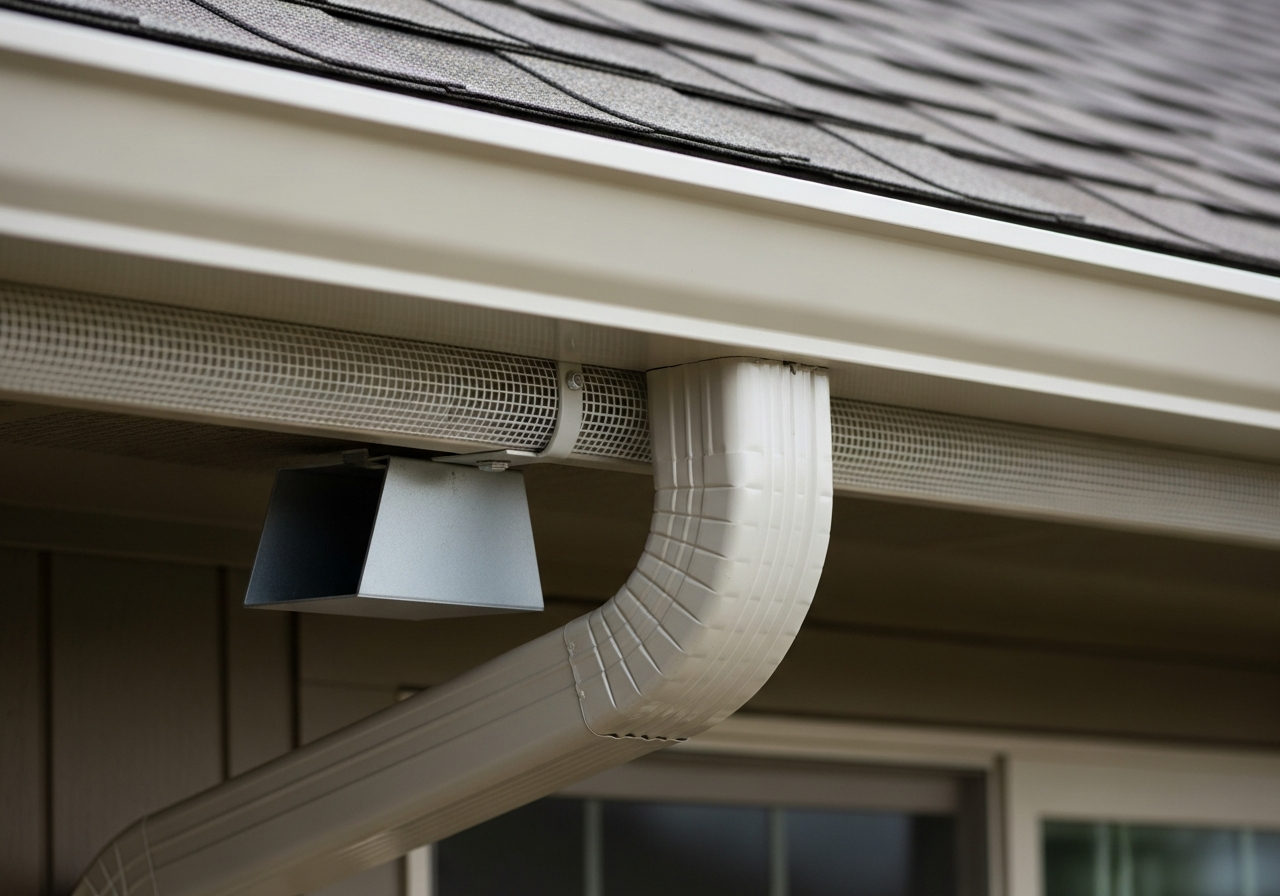
Clogged gutters in Colorado produce three predictable failures. Overflow saturates the foundation perimeter, which on expansive Pierre Shale soils causes differential settlement and cracked foundation walls. Ice dams form because melt water cannot drain, lifting shingles and forcing water under the underlayment. Fascia and soffit rot accelerates because the gutter back is in constant contact with wet debris.
- Annual gutter cleaning typical cost: one hundred fifty to three hundred dollars.
- Fascia and soffit replacement after three years of overflow: two thousand to five thousand dollars.
- Foundation crack repair from saturated expansive soil: four thousand to fifteen thousand dollars.
- Interior water damage from ice dam intrusion: five thousand to twenty thousand dollars per event.
The paint deferral cascade
A south-facing wall in Colorado loses paint film integrity at roughly eight to ten years for premium acrylic and twelve to fifteen years for elastomeric. Once the film breaks, sun and water reach the substrate. Wood siding cups and splits, requiring board replacement at thirty to sixty dollars per linear foot. Stucco develops hairline cracks that propagate to structural cracks when the elastomeric coating is gone. Fiber cement is more forgiving but the factory primer is not a long-term coating, and exposed primer chalks within three years.
The economic difference between repainting on schedule and waiting until substrate damage occurs typically runs three to five times the original repaint cost, before counting any interior damage from water intrusion.
The roof maintenance cascade
Pipe boot failures are the single most common roof leak in Colorado after age fifteen. EPDM rubber boots crack at the top within ten to twelve years on a south-facing slope at elevation. A replacement boot installed at year ten costs roughly seventy-five to one hundred fifty dollars. The same leak, discovered after two seasons of slow infiltration, typically produces drywall and insulation damage in the range of one thousand to four thousand dollars and a possible insurance claim with a deductible.
Step flashing at sidewalls, chimney counterflashing, and skylight perimeters follow similar patterns. Each is a fifty to two hundred dollar maintenance item that becomes a four to fifteen thousand dollar interior repair when ignored.
How insurance carriers treat deferred maintenance
Colorado homeowner policies cover sudden and accidental damage. They explicitly exclude damage caused by long-term neglect. Carriers including State Farm, Allstate, USAA, American Family, and Farmers all rely on the same policy language and the same forensic evidence: water staining patterns that show repeated wetting, mold colonies older than thirty days, rotted wood with insect colonization, and granule loss patterns indicating end of service rather than impact.
When the adjuster documents these patterns, the claim is denied as wear and tear. The homeowner pays the full repair cost and may also receive a non-renewal notice at the next policy term. Carriers track non-renewal patterns through the CLUE database, which retains claim and inspection history for five to seven years and follows the homeowner to the next carrier.
The maintenance budget that prevents the cascade
A reasonable annual maintenance budget for a typical 2,200 square foot Colorado home runs eight hundred to fifteen hundred dollars. That covers gutter cleaning twice per year, caulk inspection and touch-up annually, exterior paint touch-up on south and west elevations every three to four years, full repaint every eight to twelve years, roof inspection annually, and pipe boot replacement at year ten or twelve.
Across a fifteen-year ownership period this is twelve thousand to twenty-two thousand dollars in maintenance, which prevents an estimated forty thousand to ninety thousand dollars in cascade repairs based on insurance industry loss data for the Front Range.